Sustainable growth in Veteran care is built with intent, strict operational discipline, and a deep understanding of what drives long-term success.
While many healthcare organizations ensure that veterans are made aware of the rules at the outset to ensure the care delivered is genuine, few translate that early passion into a scalable framework that successfully navigates complex VA and Community Care networks.
The difference always lies under the surface and is often overlooked. High-performing care organizations do more than just process inquiries and handle daily scheduling. They invest early in better systems, standardize their communication workflows, and cultivate deep relationships within their communities.
As the healthcare landscape faces tighter federal regulations, workforce shortages, and rising expectations from military families, growth is no longer just about expansion. It is about resilience.
The organizations that succeed balance operational excellence with profound human connection, using clear st ructure to scale while staying firmly rooted in their ultimate purpose. In this exclusive feature, Marine Corps Veteran Richard L. Chambers, Founder, President & CEO of ValorPath Veteran Care Access Corporation, shares his definitive blueprint for moving beyond organizational survival.
To shed light on this, we interviewed a home care industry expert to share his perspective on how veteran-focused care organizations achieve sustainable growth.
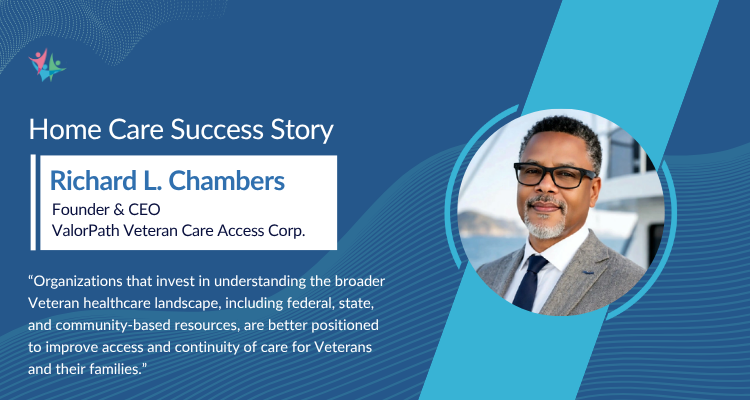
Who Did We Interview?
Richard L. Chambers leads growth and access strategy across a national care coordination network. Drawing on decades of leadership experience rooted in his service as a Marine Corps Veteran during Operations Desert Shield and Desert Storm, he specializes in scaling mission-driven organizations through strong systems, education, and strategic partnerships.
Richard works with various healthcare professionals, hospice organizations, and community networks to strengthen their VA Community Care pathways and drive operational excellence. By combining discipline and hands-on strategic coaching, he helps teams navigate regulatory complexity and deliver patient-centered care in an evolving veteran home care environment.
Let us now delve into what he has to say about scaling veteran care with purpose.
As a Marine Corps Veteran who served during Operations Desert Shield and Desert Storm, I understand from experience the sacrifices Veterans and their families make in service to our nation. Throughout my journey as a Veteran and healthcare advocate, I observed that many Veterans and caregivers struggle to navigate a complex healthcare system, particularly when seeking home-based care, hospice, palliative care, and other community-based services.
I founded ValorPath Veteran Care Access Corporation to help bridge that gap. The mission of ValorPath Veteran Care Access Corporation is to improve access to, coordination of, and awareness of quality care options available to Veterans and their families. Every Veteran deserves dignity, respect, and timely access to care, especially during life’s most challenging moments.
One of the greatest barriers is an incomplete understanding of how the VA and Community Care ecosystem connect effectively. Many providers are highly qualified to serve Veterans but may not fully understand referral pathways, eligibility requirements, and coordination processes.
Another challenge is a lack of awareness. Many Veterans and their families are simply unaware of the benefits available to them. So, it becomes imperative to improve access to care outcomes via education, communication, and seamless collaboration among providers, Veterans, caregivers, and healthcare systems.
Providers should recognize that serving Veterans requires both clinical excellence and a commitment to understanding the unique needs of the Veteran community. Success often comes from maintaining compliance, understanding Community Care processes, remaining responsive to Veteran needs, and focusing on quality outcomes.
Investing deeply in understanding the Veteran healthcare landscape is the key. Organizations doing so will be positioned to succeed, and of course, those who understand the ‘Veterans First’ mindset. Moreover, the mindset needs to be combined with a true commitment to service and excellent operational knowledge so that they can make a real difference in the lives of those who valiantly served the nation.
Artificial intelligence (AI) must be used as a tool that improves care, not as one that replaces it. Eventually, technology can help reduce administrative burdens, improve communication, identify trends, streamline workflows, and support more informed decision-making.
However, compassion, empathy, and human connection will always remain integral to healthcare. The goal should be to ensure that caregivers and healthcare professionals spend significant time with people and a calculated amount of time managing administrative tasks. This way, AI can strengthen, not diminish, the human side of care.
I believe we will continue to see demand for home-based services, with greater emphasis on care coordination, expanded use of technology, and strengthened collaboration across healthcare systems serving Veterans.
The future of Veteran care extends beyond federal healthcare systems alone. State Veterans programs, state veterans homes, community hospitals, academic medical centers, hospice providers, palliative care organizations, and community-based healthcare providers all play an important role in improving access and outcomes for Veterans and their families.
Veterans increasingly want access to quality care in the comfort of their homes and communities. Organizations that focus on accessibility, innovation, and patient-centered care will play an important role in meeting those needs in the years ahead.
Never lose sight of the mission.
Sustainable growth is built on trust, service, and a commitment to excellence. Organizations that prioritize patients, families, caregivers, and community impact create stronger partnerships and stronger long-term outcomes.
When leaders remain focused on serving people first, growth often follows naturally.
The near future will favor providers who balance empathy and compassion with operational excellence, while using AI and technology to improve, rather than replace, human touch. For leaders in this space, it is crucial to have a deep understanding of veteran discipline. Also, it’s vital to have an unwavering commitment to delivering dignified, meaningful, and patient-centered services that create a lasting impact on the community.
Our users reported 95% customer satisfaction in 2025. Schedule a personal walkthrough to see CareSmartz360, home care software in action.
 AI Hub